9,617
participants across 104 randomized controlled trials
A 2020 meta-analysis found that music interventions significantly reduced both physiological and psychological stress-related outcomes.
de Witte et al., Health Psychology Review, 2020
Make it work for you. Press Play and give your attention somewhere to settle.
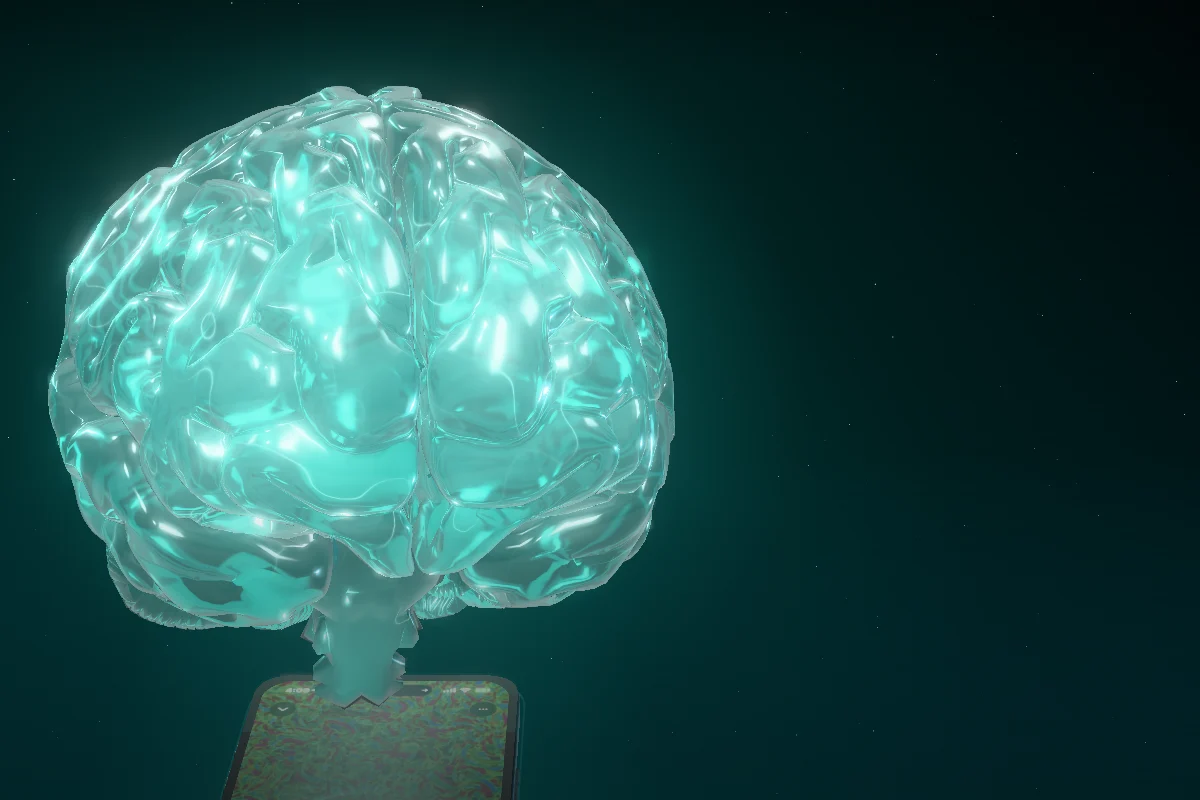
It meets the brain networks involved in attention, emotion, memory, reward and movement.
Here’s what different kinds of music do down there.
Neurons pass messages as brief electrical impulses. Each one gathers input through its branching dendrites, fires down its axon, and hands the signal to the next cell across a synapse.
Music changes the pattern of that traffic. Here’s what different kinds of music do.
Your brain locks onto a pulse. In EEG recordings, activity rises at the exact frequency of the beat you’re hearing. Motor areas such as the basal ganglia and the supplementary motor area become more active when a rhythm has a clear beat.
In the neurons: the cells fire together, on the beat.
Nozaradan et al., Journal of Neuroscience, 2011 · Grahn & Brett, Journal of Cognitive Neuroscience, 2007
Tempo drives arousal. In a study of 24 people, faster music raised breathing rate, blood pressure and heart rate. It’s a small study, so read it as a strong hint rather than a rule.
In the neurons: impulses come faster and the chain stays busy.
Bernardi et al., Heart, 2006
In the same study, slow, meditative music had a relaxing effect. A two-minute pause between tracks brought heart rate, blood pressure and breathing below their resting baseline.
In the neurons: fewer, slower impulses, with room between them.
Bernardi et al., Heart, 2006
At the moments of music that move you most, the brain releases dopamine in the striatum, part of its reward system. The caudate is more involved as you anticipate the moment, the nucleus accumbens as it arrives.
In the neurons: the whole chain charges, and the connections between cells stay lit.
Salimpoor et al., Nature Neuroscience, 2011
For reading, quiet worked best in one study. Comprehension dropped with instrumental music and dropped most with lyrics, whether people liked the song or not.
In the neurons: a second stream of signals pulls at the chain.
Perham & Currie, Applied Cognitive Psychology, 2014
Sound is more than something we hear. It interacts with the brain’s networks involved in attention, emotion, memory, and physiological arousal.
Decades of research in neuroscience and psychology have explored how music influences mood, stress, cognitive performance, and emotional regulation. Rhythm, tempo, melody, and acoustic structure can affect how we feel, while carefully selected music may help create conditions that support concentration, relaxation, and mental well-being.
9,617
A 2020 meta-analysis found that music interventions significantly reduced both physiological and psychological stress-related outcomes.
de Witte et al., Health Psychology Review, 2020
51
Music therapy produced a moderate overall reduction in anxiety, largest in how anxious people reported feeling. Effects on body measures were small and not statistically significant.
3,000+
The review identified a major role for the arts in the prevention of ill health. It covers all the arts, not music alone.
Fancourt & Finn, WHO Regional Office for Europe, 2019
Most of these studies test music therapy or structured listening, not any single app.
We reference published research from these institutions. They study music and the brain; none of them endorses Luminoise.
Music engages different parts of the brain at once and can alter mood and improve memory.
“Music to your brain,” 2020Across many cultures, listeners favour rhythms built on simple ratios, and the music they hear shapes which ones.
Nature Human Behaviour study, 2024Music-based interventions may help improve physical and psychological markers associated with stress; most studies on anxiety have had promising results.
“Music and Health,” 2022Studies the neural effects of music to develop music-based care for anxiety and depression in young adults.
Dan Bowling’s labA scoping review of over 3,000 studies on the role of the arts in health and well-being.
Fancourt & Finn, 2019Further reading: Daniel Levitin, This Is Your Brain on Music (2006), and Oliver Sacks, Musicophilia (2007).
Neuroscience-informed. Our sound design draws on published research about music, attention, mood and stress.
Not clinically proven, and not a treatment. Luminoise hasn’t been tested in its own clinical trials yet, and it doesn’t diagnose or treat anxiety or any other condition. If anxiety is affecting your daily life, talk to a doctor or a mental health professional.
No magic frequencies. Evidence on binaural beats is still mixed. A 2023 review of 14 studies found inconsistent effects on brain activity, so we don’t promise that a frequency will change your brainwaves.
Yours to start. No account needed. Listen as a guest; favorites and routines stay on your phone.
Luminoise brings this science into everyday life. Neuroscience-informed sound design and curated music, arranged as four moods you can start with one tap.
For deep focus. Steady, low-motion sound that keeps your attention on one thing.
Evil Ways, Admonishment
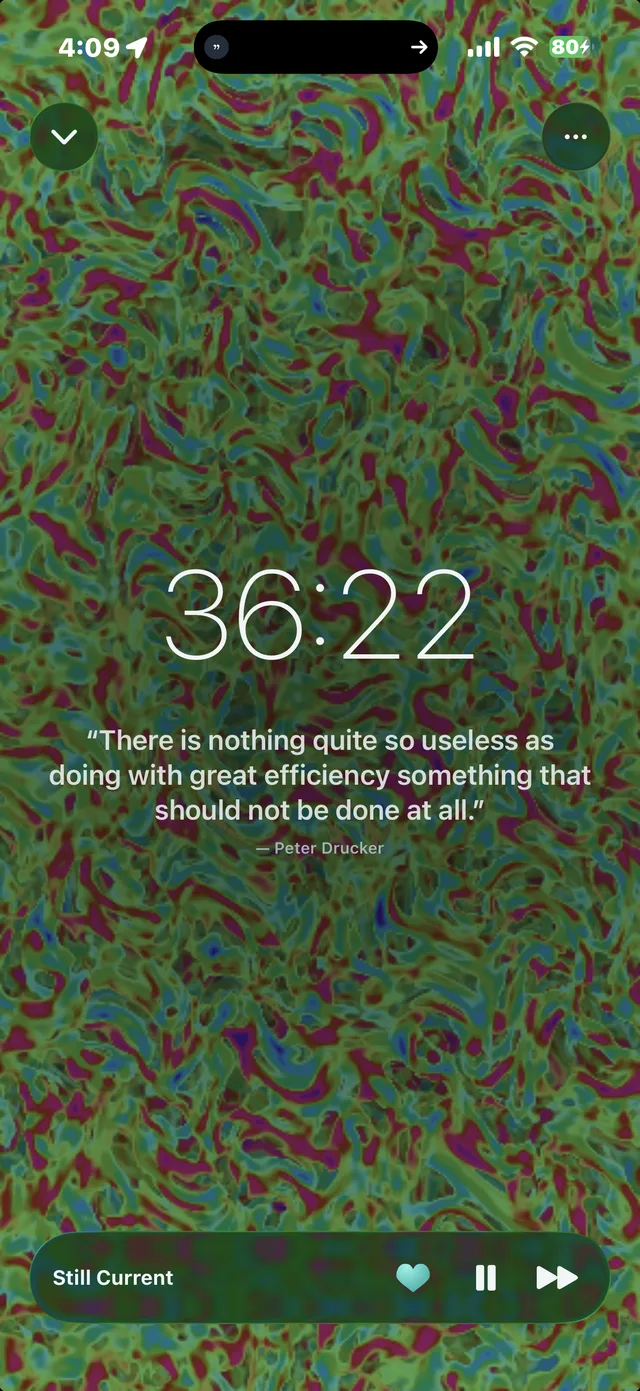
For creative flow. A current that moves without pulling at you.
Still Current
For momentum. A forward pulse for the inbox, the run, the last push.
First Light
For emotional balance and moments of calm. Warm, slow sound for the end of the day.
Blue Hour
Because the right sound doesn’t just change what you hear. It can change how you feel, think, and engage with the world.
Download for iPhoneRequires iOS 18 or later.
The same four moods and Lock In, in your browser. No install, nothing to set up.